
American Psycho
Overview
Bret Easton Ellis’s American Psycho is a 1991 American novel that combines horror, psychological suspense, and savage social satire. It was first published in English on March 6, 1991, and is widely associated with postmodern fiction. The narrator is Patrick Bateman, a wealthy young Manhattan investment banker whose life appears to embody the success promised by the 1980s American dream. He owns an expensive apartment, wears carefully selected designer clothing, visits fashionable restaurants and clubs, and moves among other privileged young men on Wall Street. Beneath this polished identity, however, he develops and acts upon the impulses of a serial killer.
Plot and narrative method
Set in 1980s New York, the novel follows Bateman through workdays, dinners, parties, dates, drug use, and nights of violence. His friends and colleagues repeatedly discuss clothes, prices, reservations, music, bodies, and professional status. They also frequently mistake one another for someone else. The recurring errors are funny on the surface but fundamental to the book’s design: these men have been made so similar by wealth, fashion, speech, and consumption that individuality has almost disappeared.
Bateman’s ordinary routines and his criminal behavior are presented in the same controlled first-person voice. He describes getting dressed, ordering food, listening to music, and entering a room with the same minute attention he gives to torture and murder. The effect is deliberately disturbing. Extreme violence does not interrupt the consumer world; it appears as another activity inside it. As the novel progresses, Bateman’s crimes become more elaborate and horrifying, but the surrounding society remains largely inattentive. The reader is also denied a stable account of what has happened. Some events seem to be confirmed, while others may belong to Bateman’s fantasies, hallucinations, or attempts to construct a terrifying identity. The novel’s ending does not resolve this uncertainty through a conventional revelation. Instead, reality, performance, memory, and delusion remain entangled.
Themes and context
The book’s central concern is materialism. Bateman and his circle measure themselves and others through brands, prices, restaurants, physical appearance, and access. Human value is repeatedly reduced to something displayable and exchangeable. Ellis turns the privileged Wall Street “yuppie” culture of the period into an exaggerated satirical environment, but the exaggeration is not merely comic. Bateman’s violence suggests what happens when a social order prizes possession and competition while emptying out empathy, responsibility, and moral recognition.
Identity and isolation are equally important. Bateman has every visible sign of belonging, yet he cannot establish a meaningful self. He is mistaken for other people because his social persona is interchangeable with theirs. His first-person narration seems authoritative while constantly revealing failures of perception, memory, and language. The novel therefore portrays both an individual’s possible mental collapse and a wider culture that has lost the ability to distinguish one person from another.
Sexual power, misogyny, class privilege, drug culture, and the cold logic of finance all enter the novel through Bateman’s consciousness. Ellis’s affectless prose is essential to the book’s satire. Lists of consumer goods and descriptions of routine luxury are placed beside scenes of terror, making the narrator’s enthusiasm for status appear disturbingly close to his appetite for cruelty. The book asks whether the true horror lies only in Bateman, or also in the world that gives him wealth, anonymity, and social protection.
Publication and lasting influence
Ellis began working on the novel when he was about twenty-two or twenty-three. His first novel, Less Than Zero (1985), had already established his interest in youthful alienation, drugs, privilege, and emotional vacancy. American Psycho transferred that sensibility to Manhattan’s financial and social elite and pushed it into an unprecedentedly controversial form. Before publication, the planned publisher withdrew amid objections concerning violence and misogyny. Ellis received thirteen death threats, and the book was ultimately issued by Vintage, the Penguin Random House imprint.
The controversy made the novel a public argument about censorship, artistic freedom, gender politics, and literary responsibility. Some readers regard its graphic violence as intolerable; others argue that the excess is precisely how the novel exposes a culture’s moral numbness. Mary Harron’s 2000 film adaptation, starring Christian Bale, made Bateman an internationally recognizable figure while using a more concentrated combination of horror and black comedy. The novel itself has gone through many reprintings, sold more than a million copies in the United States, and appeared in numerous international editions. Bateman has become one of contemporary culture’s most recognizable—and most easily misunderstood—antiheroes. As horror, satire, and an experiment in unreliable consciousness, American Psycho remains a defining and deeply disputed work of late twentieth-century American fiction.
About the Author
Early life and education
Bret Easton Ellis was born on March 7, 1964, in Los Angeles, California, and grew up in the San Fernando Valley of Southern California. He attended Bennington College and completed a bachelor’s degree there. A formative influence came during a high-school writing class taught by his English teacher and mentor, Mr. Robbins. In that class Ellis discovered Joan Didion’s Slouching Towards Bethlehem. He has described the encounter as a revelation, particularly because Didion showed him that meaning could reside in style itself, not only in subject matter. To study her method, the young writer typed out passages of her work, an exercise that helped shape his attention to voice, observation, and individual literary manner.
Ellis began writing his first novel while he was in college. In 1985, at the age of twenty-one, he published Less Than Zero. Its portrait of affluent Southern California adolescents, parties, drugs, sex, and emotional vacancy brought him immediate attention. The novel established his characteristic interest in youth culture and in the gap between surfaces of privilege and inner emptiness. Ellis became associated with the 1980s literary “Brat Pack,” a group of young American writers linked by their treatment of contemporary lifestyles, popular culture, privilege, and moral disconnection.
Major works and career
Ellis followed his debut with The Rules of Attraction in 1987, a novel about privileged college students whose shifting perspectives intensify the themes of sex, drugs, competition, and emotional detachment. His most famous and controversial book, American Psycho, appeared in 1991. Narrated by Manhattan investment banker Patrick Bateman, it juxtaposes Wall Street luxury, consumer competition, mistaken identity, and extreme violence. The novel’s publication provoked a major public controversy. The planned publisher withdrew amid objections concerning violence and misogyny, Ellis received thirteen death threats, and the book was eventually published by Vintage.
His later novels expanded the same concerns into new cultural settings. Glamorama (1998) examined fashion, celebrity, media spectacle, terrorism, and identities built through performance. Lunar Park (2005) used a more openly metafictional form to explore the author’s public image, family, memory, and the instability of fiction. Imperial Bedrooms (2010) returned to Clay, the narrator of Less Than Zero, twenty-five years after the events of the earlier novel and brought its Los Angeles world into a later period. In 2023 Ellis published The Shards, set in Los Angeles in 1981 and centered on privileged high-school students, a mysterious new student, and a serial killer. The novel continued his interest in adolescence, suspicion, desire, fear, and uncertain perception.
Ellis has also written short fiction, screenplays, and nonfiction. He participated in the screenplay for the 2000 film adaptation of American Psycho, directed by Mary Harron and starring Christian Bale. The film’s mixture of horror, satire, and black comedy made Bateman a widely recognized popular-culture figure. In 2019 Ellis published White, his first major work of nonfiction, which addresses the social-media age and criticizes aspects of political correctness and the culture of public approval. He has worked in production and screenwriting, maintains a public podcast, and in 2024 announced plans to direct the horror film Relapse as his feature-directing debut.
Reputation
Ellis is known for presenting extreme acts and opinions in an affectless, highly controlled style. His novels frequently share characters and cultural spaces, creating a loosely connected fictional universe. He records clothing, music, restaurants, media, and consumer objects with intense precision, then places those details beside alienation, cruelty, and moral collapse. This method has made him both influential and divisive. Critics have objected to the graphic violence and misogyny associated with American Psycho, while other readers and scholars view the excess as a satirical exposure of a society that has confused value with price and identity with display.
He remains a living and active American novelist, screenwriter, producer, and podcaster. His work has been repeatedly adapted and discussed across literature, cinema, and popular culture. Less Than Zero, American Psycho, and The Shards show distinct stages of his continuing examination of youth, privilege, memory, fear, and American consumer life. Whatever one’s judgment of his provocations, Ellis has secured a lasting reputation as one of the most controversial and recognizable American writers to emerge from the 1980s, and as an author whose cold postmodern surfaces continue to invite arguments about violence, freedom, identity, and literary responsibility.
StoryFlow
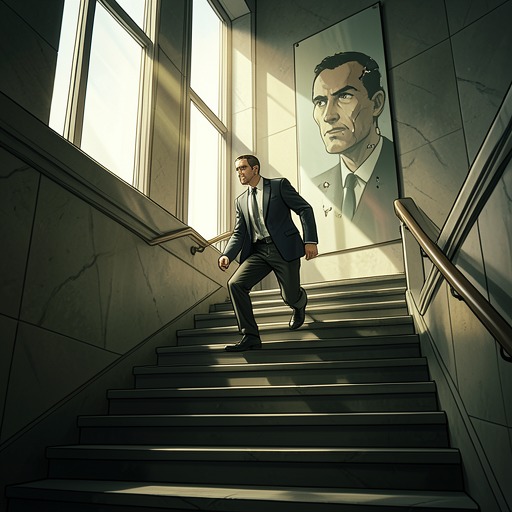
Bateman's Masked Ascent
This flow traces Patrick Bateman's rise through Wall Street privilege as his polished public identity increasingly conceals psychic disintegration and violence.

The Owen Disappearance
This flow follows Paul Owen's disappearance from Bateman's fixation through murder, concealment, and an investigation that cannot establish what happened.
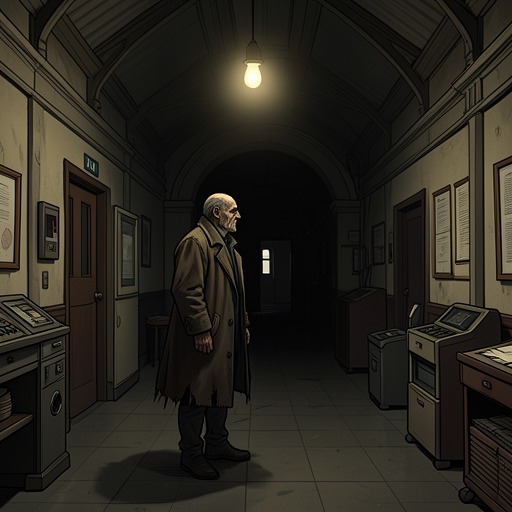
The Price Vanishing
This flow traces Timothy Price's restless despair, his symbolic escape onto Tunnel's tracks, and his later reappearance as an ambiguous survivor.
